
Iran Reopens Strait of Hormuz, But Trump Says U.S. Blockade Will Stay Until Final Deal

Iran has reopened the Strait of Hormuz to commercial shipping, bringing relief to global markets and the energy industry after weeks of uncertainty. The narrow waterway, one of the world’s most important oil routes, had been severely disrupted during rising tensions in the Middle East. Nearly 20% of the world’s oil and natural gas shipments pass through the Strait of Hormuz, so any disruption there immediately impacts energy prices and global trade. Iranian Foreign Minister Abbas Araghchi confirmed that the route is now open once again for all commercial vessels. However, ships have been instructed to continue using a designated corridor near Iran’s southern coast, where authorities believe it is safer and away from areas that may still contain sea mines. The announcement came shortly after a temporary ceasefire linked to the wider conflict involving Israel and Lebanon. While Iran has reopened the route, U.S. President Donald Trump made it clear that the American naval blockade against Iran is not ending anytime soon. Speaking on Friday, Trump said the U.S. blockade would remain in place until Washington and Tehran reach a complete agreement. “The naval blockade will remain in full force and effect as it pertains to Iran only, until such time as our transaction with Iran is 100% complete,” Trump said. According to Trump, the Strait of Hormuz may now be “ready for business,” but the United States will continue restricting Iranian ports, vessels and ships suspected of transporting goods linked to Iran. The U.S. military has reportedly deployed more than 10,000 troops, along with 12 naval ships and over 100 aircraft, to enforce the blockade. Officials said that at least 19 vessels have already turned back because of the restrictions. The reopening of the Strait of Hormuz had an immediate impact on global markets. Oil prices fell sharply after Iran’s announcement, as investors became hopeful that the flow of energy supplies would soon return to normal. Brent crude prices dropped nearly 10%, marking one of the biggest declines in recent months. Despite the positive response from markets, uncertainty still remains. Shipping companies are expected to be cautious before fully resuming normal operations, especially while the U.S. blockade remains active and concerns continue over security in the region. For now, the Strait of Hormuz is open again—but the wider standoff between Iran and the United States is far from over.
The Future of Work and Leadership: Adapting to a New Era (And Why Your Office Might Soon Feel Like a Sci-Fi Movie)

Author: Ramesh Bairi Picture this: It’s Monday morning. You roll out of bed, grab coffee, and hop into a virtual meeting where your AI assistant summarizes the agenda before you even say “good morning.” Later, you brainstorm with colleagues in a metaverse boardroom—your avatar high-fiving a coworker in Tokyo—while a Gen Z intern teaches your team how to automate that soul-crushing spreadsheet task. Welcome to the future of work, where hybrid offices, AI coworkers, and digital-native employees are reshaping the workplace. Let’s unpack what’s coming, why it’s exciting (and a little terrifying), and how leaders can survive the chaos. Hybrid Work Models: When Your Office is Everywhere (And Nowhere) Gone are the days of fluorescent-lit cubicles and rush-hour commutes. The hybrid work model isn’t just a pandemic Band-Aid—it’s a full-blown revolution. Employees now demand the freedom to work from a beach in Bali or their couch, while companies reap the perks of a global talent pool and lower overhead costs. But let’s be real: Making hybrid work actually work is like herding cats. “Why Is My Wi-Fi Always Down?”: Building a Seamless Hybrid Infrastructure Imagine this nightmare: You’re presenting to clients, but your VPN crashes. Your teammate in Berlin can’t access the shared drive. The sales lead’s mic is stuck on mute. Hybrid work thrives on tech that doesn’t suck. Tools like Slack and Microsoft Teams are the new office water coolers, but the real magic lies in AI-powered upgrades: Pro tip: Companies like GitLab (fully remote since 2014) use “handbooks over hierarchy” to keep teams aligned. Every process is documented in a searchable wiki—even how to fix the office coffee maker. Rethinking Office Spaces: From Cubicles to Creativity Hubs Why commute to an office just to answer emails? Forward-thinking companies are ditching rows of desks for “collaboration zones.” The catch: Employees now fight over who gets the office. A 2023 survey found 60% of workers want to come in only for team lunches or workshops. The rest of the time? Let them work in pajamas. “But How Do I Know They’re Working?”: Measuring Productivity Without Micromanaging Middle managers used to prowl the office like hall monitors. Now, with hybrid work, leaders are learning to trust outcomes over hours logged. But beware: A 2023 Harvard study found that remote employees work 10% longer hours—but risk burnout. The fix? France just banned after-hours emails. Could “right to disconnect” laws go global? Hybrid Hell: When Loneliness, FOMO, and Burnout Collide Hybrid work isn’t all sunshine and sweatpants. Remote workers often feel like second-class citizens: Solutions in the wild: AI, Robots, and the Future of Your Job (Spoiler: You’re Not Obsolete… Yet) Let’s address the elephant in the room: Is AI coming for your job? Short answer: Yes and no. While AI handles spreadsheets and data crunching, humans are still better at, well, being human. Meet Your New Coworker: The AI Intern AI isn’t just a tool—it’s a teammate. But the creep factor is real: Amazon once scrapped an AI recruiting tool because it penalized female candidates. Oops. “Upskilling or Else”: Surviving the Automation Wave The World Economic Forum predicts 50% of employees will need reskilling by 2025. The jobs of tomorrow? Success story: AT&T spent $1 billion on reskilling programs, transitioning 100,000 employees from legacy roles to cloud engineering and data science. The Human Edge: Why Empathy Beats Algorithms AI can diagnose diseases and write legal briefs, but it can’t The winning formula: Let AI handle grunt work, while humans focus on innovation. At St. Jude Children’s Hospital, radiologists use AI to analyze scans faster—but doctors still break tough news to families. Gen Z and Gen Alpha: The Workforce That’s Rewriting the Rules Move over, millennials. Gen Z (born 1997–2012) and Gen Alpha (their younger siblings) are here, and they’re nothing like their parents. “Why Would I Work Here?”: The Rise of the Purpose-Driven Employee Gen Z doesn’t care about corner offices. They want: Fail at this, and they’ll quit: A 2023 survey found 40% of Gen Z workers left a job because it “didn’t align with their values.” TikTok-Taught and Tech-Obsessed: The Digital-Native Workforce These kids grew up with iPads in their cribs. But they’re not all coders: Only 33% of Gen Z feels “digitally ready” for the workforce. Surprise! Gig Life: Why Loyalty is Dead (And How to Adapt) Gen Z prefers to use DoorDash on weekends rather than pursue a corporate career. The challenge: How do you build culture with a revolving door of gig workers? Leadership in 2030: From Bosses to Coaches Command-and-control leadership? That’s so 2010. Tomorrow’s leaders are part therapist, part tech guru. The Empathy Algorithm: Leading With Vulnerability Microsoft CEO Satya Nadella credits empathy for the company’s turnaround. His playbook: The data backs it up: Companies with empathetic leaders see 50% higher employee retention. AI Whisperers: When Your Boss is a Data Scientist Leaders don’t need to code, but they must speak tech: Case study: After a ransomware attack, Maersk’s CEO led a global reboot of 4,000 servers in 10 days—then hired a hacker to train staff. The Flexibility Trap: Balancing Freedom With Focus Unlimited vacation. Remote work. Four-day weeks. But how do you keep teams aligned? Conclusion: The Office of the Future is Whatever You Want It to Be The future of work isn’t about ping-pong tables or free snacks. It’s a choose-your-own-adventure story where: But here’s the kicker: Technology alone won’t save us. The human skills of empathy, creativity, and ethical grit will decide who thrives. Leaders who cling to outdated playbooks will drown in turnover and TikTok call-out videos. Those who adapt? They’ll build workplaces where robots and humans actually get along—and where work doesn’t feel like work at all. So, ready to ditch your desk? Your AI assistant is waiting.
The Art of Living Intentionally: A Conversation with Maria Castellucci Moore

“When you move through life with intention, patience, curiosity, and heart—whether holding a book or a glass—you create experiences that nourish, connect, and endure.” The words of Maria Castellucci Moore demonstrate her identity as a woman who developed two different but beautifully connected professional paths based on her personal philosophy. Maria Castellucci operates Castellucci Estate at Carneros in Napa Valley while she holds the title of first-generation Italian American and award-winning author of the Traveling Mindfulness Series for children. Her journey shows deep connections to the land and her family and her creative work and her connections with her local community. Maria moves through different realms by using her family-owned land to farm Pinot Noir, which reminds her of her father’s Calabrian childhood, and she writes children’s books that teach mindfulness through the experiences of her four children. She produces single-vineyard wines that bear Italian musical terms as names, while she backs arts education, and she creates narratives that enable young readers to uncover the marvels that surround them. The woman demonstrates her leadership skills through her work in a male-dominated field, which she leads with a focus on long-term impact instead of business expansion, while she works to support other people through her charitable activities and storytelling efforts. Maria describes her most important life events and the principles that guide her work as a writer and winemaker and mother and legacy creator in this rare interview. Roots and Resilience: The Immigrant Story That Started It All The life of Maria Castellucci Moore starts from her father’s family’s annual journey to Calabria’s small villages, where they created wine through their basement wine production. The process of transforming grapes into wine for communal use demonstrated to him that this activity served both economic purposes and the functions of cultural heritage and social bonds and personal identity. The first-generation immigrants of her family brought their ancestral practices to America when her parents arrived as immigrants who sought better opportunities. Her father discovered his ideal house when he found a magnificent estate in the Carneros area of Napa Valley. The land, which produced perfect Pinot Noir and Chardonnay grapes, connected him with his heritage and his boyhood times in Italy. The family’s initial pastime developed into a much larger enterprise, which they built from their original family activity. The vineyard served as Maria’s connection point between her Italian heritage and her American future. She explains that her winemaking practice combined her passion for the land and agriculture with her artistic expression of winemaking. Maria realized that she cultivated social connections through her grape farming operations because she raised her children on the same land, which held historical ties to their ancestors. The ancient tradition of winemaking exists as a timeless artistic expression, which she used to establish a legacy path for her family. The Calabrian origins of her family established their roots in Napa Valley, but they would transform into a splendid achievement. Finding Her Why: The Transformative Power of Purpose The turning point of Maria’s important life journey arrived at the moment when she discovered her fundamental purpose. She discovered her authentic self during a period of personal difficulties, which required her to overcome obstacles. Her deep understanding of herself would become the basis for her winemaking and writing practices. The vineyard operations established a dedication system that prioritized intentional methods over business growth, product excellence over product volume, and narrative development over marketing techniques. “When you find your ‘why,’ it is transformational,” Maria explains. The business foundation established by Castellucci Estate operates as a boutique brand that develops deep connections instead of pursuing business expansion. The organization operates from a core mission, which directs all wine and vintage and decision-making processes. The same knowledge system her children’s books developed from her experience of developing mindfulness skills during personal development. The realization that one person could change another’s life through authentic expression propelled her forward. Maria’s “why” exists as a dynamic force that continuously shapes all her professional activities. The artist needs to create from his inner self because genuine artistic expression will always prevail, according to her. The creator’s purpose becomes transparent through his work, which includes everything from wine to children’s literature. The Philosophy of Place: Crafting Wine That Tells a Story The fundamental principle of Castellucci Estate centers around the belief that wine forms a conversation among the elements of land and time and human beings. Maria describes the estate’s core approach as “rooted in the interconnectedness of family, artistry, and intention.” The wines present themselves as single-vineyard wines that showcase their origin through their dedication to time and their ancestral heritage. The Oakville Castellucci Estate vineyard needs to show itself, which unites its ideal weather conditions and soil features and expert agricultural methods and proven winemaking abilities into one perfect result. “Our brand achieves its highest expression through our land,” Maria states. The commitment to terroir requires vineyard operations to accept that environmental conditions will determine their yearly production capabilities, which depend entirely on natural weather patterns that operate in an unpredictable manner, and thus maintain a state of modest and respectful behavior among team members. The brand reached new heights because Maria hired Philippe Melka, who introduced his team to the winery while maintaining its original European style by using terroir-based methods. Maria describes the wine as “a sensory story meant to be shared” because it goes beyond its function as a beverage. Each bottle holds more than fermented grape juice because it contains the family’s history and the unique characteristics of the land and the goals of everyone who interacted with the product from its vine stage through to its glass stage. Wine functions as a narrative that transforms into a legacy that exists as an artistic expression. Harmony in a Bottle: Where Wine Meets Music and Philanthropy The competitive global market finds its unique selling point through Castellucci Estate’s exceptional combination of wine and music, which holds special significance for Maria and her family.
The Human Algorithm: Ramesh Bairi Merges Tech, Trust, and Wellness
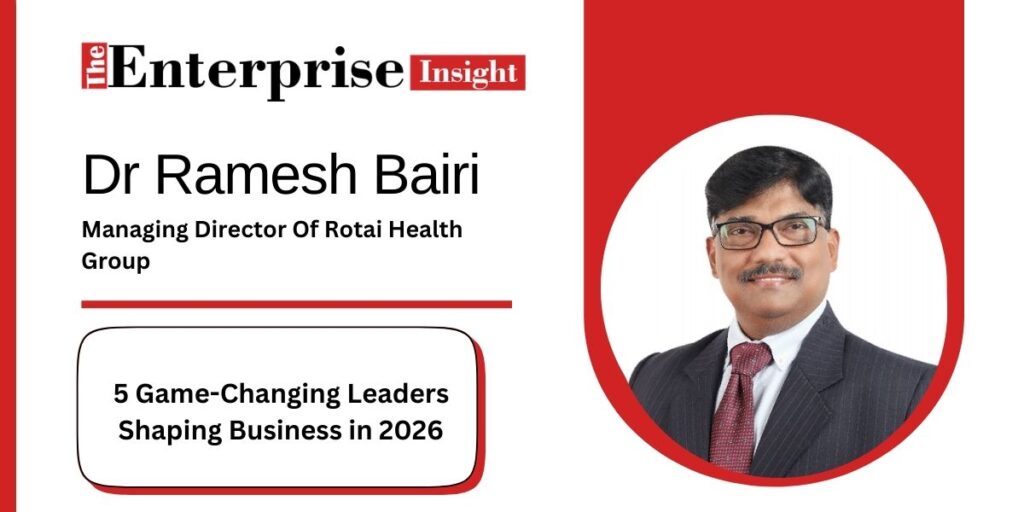
“Leadership is not about being in charge. It is about taking care of those in your charge.” This is not only a quote for Dr. Ramesh Bairi, Managing Director of the industry-leading Rotai Health Group, but also the roadmap of a career that has spanned over three energetic decades. Bairi, in the time when business stories were mostly told in terms of speed and disruptive noise, also speaking of a different, more lasting kind of change: one that is made through global ambition and local compassion, aggressive strategy and humane governance, Bairi being a change-maker who believes that sustainable growth is at the intersection of global ambition and local empathy, and of aggressive strategy and humane governance. As we approach the year 2026, which is going to be the scene of digital intelligence, wellness revolutions, and geopolitical shifts, leaders like Bairi who are not only looking to the next quarter but also the next quarter-century are becoming the defining archetype. His journey from urban sales markets of 1990s India to the director of a forward-looking health-tech conglomerate across international markets is close to a perfect example of both adaptive and principled leadership. This is the tale of how a leader influences a company and how that company’s value system in turn influences the future. The Formative Crucible: Lessons from the Ground Up Ramesh Bairi’s journey into the business world was anything but coming from a boardroom. He was in the thick of it all in the Indian markets of the early 1990s, where his sales and marketing activities took place and where modern retail concepts were still in their adolescence. This experience at the very center of action turned out to be his deadliest weapon in the battle of learning and unlearning. The market was his school and close to the market was his teacher, he says looking back. Here he was able to observe consumers, figure out prices and, most importantly, gain trust with the people he was working with. He made it clear through the immersion that business was a human act by saying that the market was not a thousand but a human. He was not just a brand leader for global brands; first, he was a listener of the market’s heartbeat—a skill that later would make him different from others in hearing the subtle variations of pulse across continents. The Global Pivot: Where Strategy Meets Culture The defining moment that changed Ramesh Bairi’s path was his entrance into international business, where he covered Africa and the Middle East. It was the main reason he admitted to his love for world brand building. He saw that the most powerful brands were like “trust systems,” where they made emotional connections between different countries. He soon realized that the best way to get his message across was to make brands that are “globally credible yet locally relevant.” He would not have a one-size-fits-all model and, instead, he would perceive that it is the collaboration and acknowledgment of indigenous culture which would lead to global consistency and, therefore, the sustainability of the enterprise in the long run. His perception quickly turned into the rule of thumb in his management of the world and he converted the market intricacy from a hindrance into a means of competitive advantage. Leadership Forged in Complexity, Not Comfort Ramesh Bairi does not mince words when he says his leadership was more influenced by the hardships and complexities of the situation rather than by ease. His experience of handling operations in different countries gave him the insight that a really great leader is the one who provides rock-solid clarity and does not put uniform control on every aspect of the operation. He declares, “The execution may differ in different markets, but the three principles of accountability, transparency, and trust will always be the same.” Among the significant happenings were the bottling off of companies with modest revenues and the infusion of nine-digit turnover, a journey that called for the establishment of tough systems and the very hard practice of turning down unsustainable growth. This was all going on at the same time as other economic downturns and very important negotiations, which made him even more resilient and taught him even more about the critical role of emotional intelligence and humane decision-making during pressure times. The Core Lesson: Governance Over Mere Growth For Dr. Bairi, the major career lesson that he concludes with is the same as the basic rule: “Growth without governance is fragile.”He warns the leaders against the costly mistake of using temporary market lift and permanent supremacy interchangeably. The true and lasting success, he asserts, is not a fortunate occurrence of events but the intended result of a stringent alignment of the four pillars; a coherent strategy, capable people, robust processes, and unwavering core values. This structural necessity is accompanied by an equally strong personal conviction: “Leadership is a responsibility, not a privilege.” According to him, a leader’s lasting impact is determined not by their rank or title, but by their visible actions—the calmness exhibited during a crisis, the kindness shown to the team in hard times, and the daily adherence to the proclaimed values. These two aspects combined form the ethical foundation of his philosophy. It argues that to create a lasting institution, both the architectural discipline of proper governance and the moral discipline of accountable, values-driven conduct that ensures scaling is done on a non-crumbling base need to be combined. Rotai Group: Innovation with Empathy Dr. Ramesh Bairi’s leadership has been most instrumental in shaping the Rotai Group into a company that stands out for its melding of high-tech with human wisdom. He describes the company’s nature as “an organization centered on the future, health, and technology that is devoted to a better life through smart wellness solutions.” This vision has very little in common with mere commercial transactions; it is, rather, a promising lifestyle change in which advanced technology will play a very human role. The idea of “innovation with
The Future of Leadership: Skills That Define Tomorrow’s Leaders

Think about the best leader you’ve ever worked with. Not the one with the biggest title, but the one who made you feel confident, capable, and genuinely valued. That experience captures what leadership is becoming in today’s world. Leadership is no longer about authority or control. It is about influence, empathy, clarity, and the ability to guide people through constant change. Workplaces are evolving. Technology is accelerating decisions. Teams are more diverse than ever. And uncertainty is becoming a normal part of business. You may have noticed that employees today don’t just want instructions. They want purpose. They want transparency. They want leaders who understand both people and progress. This is where Future of Leadership separates itself from traditional management. The future of leadershipp will be defined by leaders who can balance digital understanding with human connection, strategy with ethics, and innovation with inclusivity. This article explores the leadership skills, leadership mindset, leadership strategies, and emotional intelligence in leadership that will shape tomorrow’s leaders across industries. Digital Leadership: Managing People, Data, and Innovation Walk into almost any modern workplace and you’ll see screens glowing with dashboards, metrics, forecasts, and real-time analytics. Yet, despite all that information, teams often pause and ask the same question: What should we do next? That gap between data and direction is exactly where digital leadership proves its value. Digital leadership is not about coding skills or knowing every new tool on the market. It’s about understanding how to connect people, data, and innovation so that technology becomes a source of clarity rather than confusion. At its core, digital leadership is a mindset that helps organizations translate information into action and innovation into meaningful progress. You may have noticed that many companies invest heavily in technology but still struggle with execution. The issue is rarely the software. It is the absence of leadership that knows how to use technology to empower teams and improve decision-making in leadership. Why Digital Leadership Is Now Central to Leadership Leadership has always been about guiding people toward goals. What has changed is the environment in which those goals are pursued. Today’s leaders operate in a landscape shaped by artificial intelligence, automation, remote collaboration, cloud platforms, and constant connectivity. In this environment, executive leadership requires digital awareness. Leaders must understand how technology influences workflows, communication, customer experiences, and strategic opportunities. Consider how Satya Nadella reshaped Microsoft. His impact wasn’t limited to adopting cloud computing or expanding AI capabilities. He redefined Microsoft’s leadership culture to prioritize learning, collaboration, and curiosity around technology. Teams were encouraged to explore, adapt, and innovate without fear. That cultural shift, driven by digital leadership, transformed Microsoft’s growth trajectory. Connecting People and Technology One of the biggest misconceptions about digital leadership is that it focuses on tools. In reality, it focuses on people. Digital tools are only effective when teams feel confident using them. Leaders play a crucial role in reducing resistance and encouraging adoption. When leaders show openness to learning new systems, teams follow. This is where leadership communication becomes critical. Explaining why a digital shift is happening, how it benefits employees, and what support is available creates trust. Without that communication, even the best technology creates frustration. Practical ways leaders can connect people and technology include: Digital leadership turns technology into a shared journey rather than a top-down mandate. Using Data for Smarter Decision-Making in Future of Leadership Data is powerful, but only when interpreted correctly. Many leaders drown in reports without extracting insight. Digital leaders, however, know how to ask the right questions of the data. Instead of asking, “What do the numbers say?” they ask, “What story are the numbers telling us?” This subtle shift improves decision-making in leadership. It moves teams from reactive thinking to proactive strategy. For example, customer behavior data can guide product development. Employee performance data can improve engagement strategies. Market analytics can inform expansion plans. But this only happens when leaders bridge the gap between analysis and action. Digital leaders: Encouraging Innovation Through Digital Experimentation Innovation thrives in environments where experimentation is encouraged. Digital leadership supports this by allowing teams to test ideas using technology without fear of failure. Leaders who say, “Let’s try and learn,” create a culture of progress. This mindset strengthens leadership strategies aimed at long-term growth. Small digital experiments often lead to major breakthroughs. Whether it’s automating routine tasks, testing AI chat support, or improving collaboration through digital platforms, these changes build momentum across teams. Ethical Leadership in the Age of Technology With digital advancement comes responsibility. Issues around data privacy, AI bias, and cybersecurity require leaders to practice ethical leadership. Digital leaders must ask: Ethics is now deeply connected to digital decision-making. Organizations that ignore this risk losing trust. Building a Strong Digital Leadership Culture A sustainable digital transformation depends on leadership culture. When curiosity, learning, and adaptability are encouraged, digital progress becomes natural. Leaders can build this culture by: The Human Side of Digital Leadership Despite all the technology, digital leadership remains deeply human. Emotional intelligence in Future of Leadership helps leaders understand how change affects teams. Empathy reduces resistance. Clear communication reduces confusion. When people feel supported, they adapt faster. Preparing for the Future of Leadership The future of leadership will depend heavily on digital fluency. Leaders who understand how to combine technology with human insight will guide organizations successfully through change. Digital leadership is not a trend. It is becoming the foundation of modern leadership itself. Leaders who ignore digital transformation may survive for a while. Leaders who embrace it thoughtfully will shape the future. Leadership Mindset: The Inner Game of Leadership Before leadership shows up in meetings, strategies, or decisions, it quietly forms in the way a person thinks. Long before a leader speaks, acts, or directs, there is an internal dialogue shaping perception, judgment, and response. This is the leadership mindset—the inner game that determines how leaders interpret challenges, handle feedback, and grow through experience. You may have worked with someone incredibly talented who struggled to lead effectively.
James Stephens: The Man Who Bet on Quantum Before the World Knew It
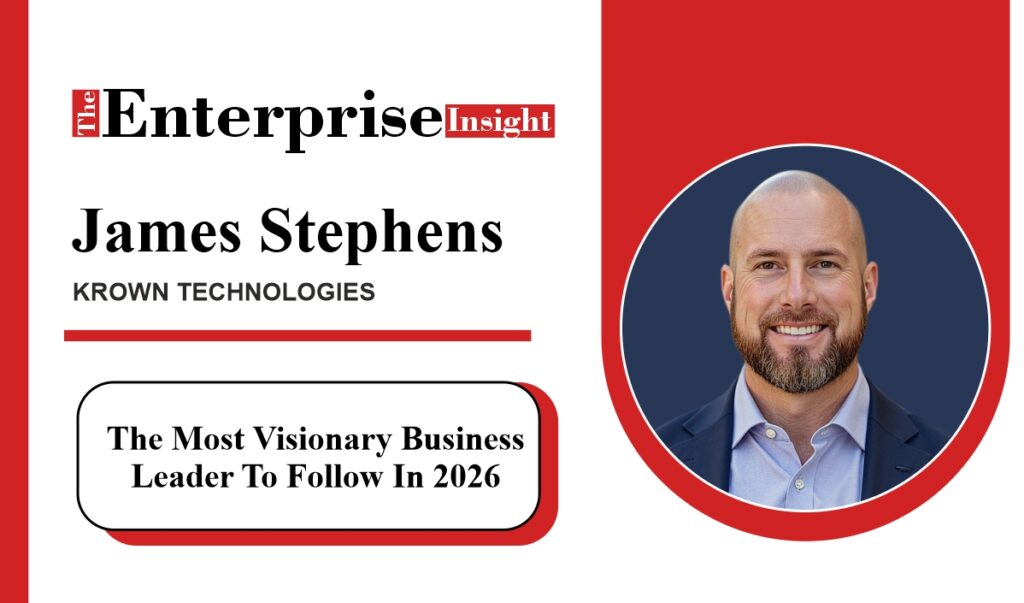
The lab is not the only place where true innovation occurs, sometimes it even happens among personal crises. For James Stephens, the future of digital security was determined by personal loss – the pain of crypto scams that had trust issues as collateral damage plus the cancer battle that allowed him to define resilience. He was the only one who saw a blueprint while others were caught up in setbacks. This mixture of human and technological weakness made him draw a very radical conclusion that the next big thing in the digital world is not just to build faster blockchains but to build ones that cannot be broken. This is the belief that underlines Krown Network and makes James Stephens more than just a CEO; he becomes a trust architect for a quantum world that is yet to arrive. His trail blazed through time and was not in vain; he changed the future from visions into code for an ecosystem strong enough to survive the hazards of tomorrow through personal hardship. This is the narrative of the person who is a pioneer of the incorrigible spine of our digital future, a person who works years ahead of the rest of the world, hearing the clock ticking only when it is too late. Leadership Tempered in the Crucible of Challenge Stephens’ trajectory was never a straightforward climb. One of his biggest professional obstacles was the lonely battle at the beginning to persuade skeptics that quantum security was an urgent need rather than a fancy word, an issue far away in time. James Stephens’s warnings about the future threat from quantum computers in the area of security were oftentimes dismissed as being premature or unnecessary in an industry that was usually concerned with immediate scalability or speculative yield. Alongside this professional disbelief was a very personal struggle: he went through cancer three times. These two-fold trials—one of foresight and the other of life—were the major factors that changed his concept of a leader. They were telling him that a leader is only defined by his challenges, but rather by the character and strength shown when responding to them. The ability to listen with humbleness, the openness that comes from being vulnerable, and the unwavering strength necessary to push through hard times became the fundamental principles of his leadership style, which was directly forged in these trying fires and is still now embedded in Krown’s operational DNA. The Foundational Learning: Adversity as the Ultimate Teacher Upon reflecting on his travel, Stephen simplifies his major lesson into a strong saying: failure and hardship are teachers not sentences. Every case of skepticism in the profession and every personal loss did not act as a stop sign but as an agent that made him stronger, thus his determination was made stronger and his method was improved. This acquiring of knowledge has a major effect on his leadership style that puts listening, integrity, and people-centeredness at the top in every decision. At Krown Network, such changes lead to an organizational commitment to transparency and accountability being a part of the company’s culture. Publicly declared roadmaps that the company is determined to meet, in periodic “Ask Me Anything” sessions that keep open communication with the community, and in compensation systems that are favorable to long-term holders rather than short-term traders are some of the ways this manifests. For Stephens, this principle is the absolute foundation of sustainable growth, always reminding us that technology should ultimately be for the people and not against them. Solving the Dual Crisis: Security and Utility Krown Network tackles head-on two major problems that have been around in the blockchain industry for a long time. To begin with, it deals with the issue of quantum threat which can end the existence of the major blockchains by attacking the very cryptographic methods that are used today. The team composed of Stephens and others has already made sure that the Krown platform will be automatically secured against quantum attacks by integrating the use of Quantum Random Number Generation from their collaborators QeM and Post-Quantum Cryptography from ExeQuantum in addition to their patented PQC protocols. Next, it tries to solve the widespread “utility gap” problem where most projects are reduced just to the speculation of tokens. Krown’s extensive Camelot Ecosystem is the concrete example of the coming of Krown, which is capable of all that and even more—facilitating payments and socializing, sophisticated trading, and asset tokenization—just to name a few. Krown’s security combined with its vast utility is very much like an all-in-one digital economy instead of just a single-point solution like with others. The Proprietary Edge: Frameworks for an Unbreakable Future To realize this vision, James Stephens and his team have developed groundbreaking proprietary frameworks. The most user-facing is 4FSA (Four Factor Synchronous Authentication), a login system that seamlessly layers facial recognition, fingerprint, voice, and a secret phrase—all within five seconds—creating arguably the most secure wallet and ecosystem access in Web3. Beyond partnerships, they have also developed their own proprietary Post-Quantum Cryptography (PQC) frameworks, establishing valuable intellectual property in next-generation blockchain defense.From an architectural point of view, the whole project is ruled by the Camelot Ecosystem model, a connected economy comprising more than thirty utilities where each of them adds up to the value of the native KROWN coin. Such advancements not only make Krown different but also incredibly hard to copy thus establishing a strong barrier for competition. Thought Leadership: Mentoring the Next Generation – James Stephens Stephens does not only influence through Krown’s codebase; James Stephens has been doing so by being a leader and a mentor. He was a writer of research and book material covering various aspects of security such as quantum and blockchain, being one of the major contributors and has been talking on the panels where AI, blockchain, and quantum computing were the topics of discussion. He was perhaps the most impactful, as he was the one who provided support and guidance to the new entrepreneurs in the Web3
Building a Legacy of Truth: The Dan Wolstein Story
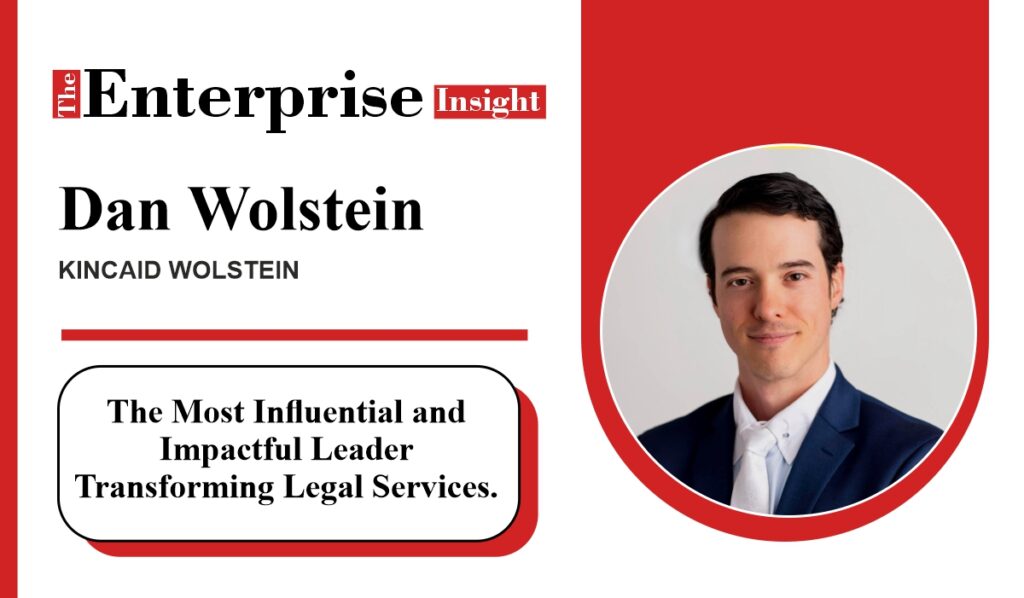
“What lies ahead of you and what lies behind you are tiny matters compared to what lies within you.” This powerful philosophy is the basis of the revolutionary method of legal expert services of Dan Wolstein. In the high-risk arena of evidentiary hearings, wherein expert witnesses are likely to sway the verdict of cases worth multi-millions, Wolstein has developed a profitable practice and also an alternate model that gives precedence to human capability and moral leadership. Through the faith in inner power, Wolstein has maneuvered Kincaid Wolstein into the group of roughly 25 professionals who are setting the new standards for being the experts in today’s intricate and difficult legal situations. The Foundation: Mentorship and Mastery Dan Wolstein’s career path leading to vocational and rehabilitation services was initially determined by his stepfather, Dr. Charles Kincaid. At the same time, he was under the supervision of Dr. Kincaid; he learned vocational evaluation and life care planning aspects thoroughly. He says, “He started me at the bottom of the company, and I progressed all the way up to the top as a testifying expert.” This training reinforced the necessity of meticulous analysis and the capacity to convey the conclusions clearly in court. Wolstein’s early period was a great learning experience, as he was able to witness the scientific and practical sides of vocational expertise. By watching his mentor’s savvy in the courtroom—direct examination and challenging cross-examinations—he got a glimpse of the field. This base not only imparted him with technical expertise but also lit his fire to assist people to live through vocational rehabilitation. The Vision: Building Beyond Tradition When Dr. Kincaid retired in 2018, Wolstein was at a turning point. Instead of just keeping things as they were, he dreamed of the firm significantly increasing its influence and power. “I was driven to strengthen the firm,” stated Dan Wolstein, which in turn impressed his ambition of instituting a distinct entity in the vocational and rehabilitation services sector. His aim was to grow while at the same time providing the same personalized, boutique-quality service that had been the hallmark of the firm. Wolstein’s plan was to increase the firm’s know-how by adding to it and enlarging the team. “I am indeed very motivated to find out how far the firm can go and how many experts we can have in the different specialties,” he clarifies. Presently, Kincaid Wolstein Vocational and Rehabilitation Services has a staff of about 25 specialists who are all focused on and committed to creating and nurturing a field of excellence and innovation. The Strategy: Accessible Expertise Kincaid Wolstein, an expert firm, aimed at being different from the established experts; hence, the need for a unique strategy. The main reason for their coming was really their strong belief in service and being prompt. “We found our way by being extremely responsive and also collaborating as a team under the pressure to turn reports around in tight deadlines,” Wolstein narrates. This working strategy became the hallmark of their success, proving that reliability and cooperation could even beat the established market positions. The multi-specialty structure of this expert firm also gave them a competitive edge. “As for Kincaid Wolstein, the experts’ help is always available,” points out Wolstein. “We possess a lot of professionals working in different fields and thus make it easier for our clients to get all needed services under one roof.” Such a manner of working, partnered with what Wolstein terms as experts who “testify very well and are very good with cross-examination,” gave the attorneys involved in intricate litigation cases that needed a variety of skills dealing with them amazing value. The Culture: Principles Over Rules Dan Wolstein’s management approach is a breath of fresh air that is not similar to conventional corporate leadership styles. “He is really the essence of his practice-based, principle-led philosophy,” one can quote him saying, “principles over rules, and always be ready to carry the heaviest part.” Wolstein, instead of managing from the shadows, is right next to his subordinates on the floor and is to “find the best in each member,” and by that, he is to believe that true potential is going to come out from within and not by enforcing it through outsiders. The leading manner brings a great deal of compassion and cooperation in the workplace. “Most people will be easier to handle if one considers and acknowledges them as doing their best work and at the same time takes a solution-oriented approach to guide the poorly offered support through the most effective teamwork,” Wolstein sees this as one of the keys to their success. His way of making decisions betrays this spirit of collaboration: “I always try to consult with others and figure out what is going to work best for the team. It is always with the team in mind that I make decisions.” This particular method ensures that there is mutual respect and joint ownership of the results. The Growth: Nurturing Potential Dan Wolstein’s leadership philosophy has a very significant impact on the company when it comes to career development and promotion. “My administrative staff and my specialists are fully aware that there is no glass ceiling at the organization,” Wolstein says with great pleasure. By holding this position, the company is getting a better and more capable staff through regular competition among them, who can see a long-term career and constant growth in the company instead of looking for promotion outside the company. This belief is also seen in practice through the support provided for the staff’s development. “Some of my admin staff are in training to become experts,” Wolstein notes. “Kincaid Wolstein supports the team’s growth and learning by encouraging those to further their education.” The company is providing education for its people and skill development, which increases the value of its biggest asset—the potential in its workforce—and thus, the cycle of talent development and organizational success will continue. The Innovation: Technology and Transformation Technology has been an essential factor that allowed
The Ultimate Guide to Fast WordPress Hosting in 2025

The website speed is the most critical in this digital age we live in. It could make or break the user experience for your business website, blog, or eCommerce site. A fast WordPress hosting provider can determine user experience, SEO ranking, and conversion rates. A slow-loading site deters visitors, hinders brand reputation, and adversely affects revenue. We will highlight the importance of fast WordPress hosting, key features to look out for, some of the top hosting services to check them out in 2025, and a few tips to optimize site loads. The Importance of Fast WordPress Hosting 1. Enhances user experience A website visitor expects a website to load in a few seconds. If not, it leaves an impression of a bad user experience. A study says that any website that takes longer than three seconds for loading will be abandoned. A well-functioning, fast-loading website keeps visitors for longer and gets more interaction with the content. 2. Boosts SEO rankings Fast-loading websites are ranked higher by Google in their search engine ranking. The faster your website loads, the better chance you will have on landing a higher position on SERPs. Site load speed is a confirmed site ranking factor; thus, this makes it essential for growing organic traffic. 3. Enhanced Conversion Rates Speed will have an impact on sales and lead generation. One-second delay may lead to a severe drop in conversions, as studies have shown. An e-commerce website that loads faster allows consumers to follow through easily, hence lowering cart abandonment rates. 4. Improved Server Response This is the aspect that a hosting service provider should offer to ensure your website stays intact amidst surges in traffic. This happens to businesses that have seasonal sales, promotional campaigns, or viral content traffic when the businesses are already overwhelmed. During such times, faster servers help maintain stability. Key Features to Look for in Fast WordPress Hosting 1. SSD Storage Solid state drives (SSD) make transfers a lot faster than a traditional hard disk drive (HDD). Therefore, the usage of SSDs diminishes latency much, and this will work to the advantage of making it quicker to load your website content. WordPress Hosting 2. CDN Integration A content delivery network (CDN) is a mass of servers that work to deliver your whole content around several places around the globe, thus reducing latency and speeding load times for visitors from different geographic locations. 3. Server-Side Caching Cache connectivity or built-in caching will improve performance as stored data is frequently accessed. So server-side caching will really offer a definite speed improvement by avoiding repeated querying of the same data from the database. 4. Scalability Find out if the hosting provider can handle an increase in traffic without compromising performance. Scalable hosting solutions ensure the growth of your business without worrying about slowdowns. 5. PHP and Database Optimization When running the latest versions of PHP along with optimized databases, speed performance is improved. The slow performance due to older PHP versions is an important reason for choosing sustainable hosts that offer the latest software support. 6. Dedicated Resources Dedicated CPU and RAM preclude performance loss in hosting plans. Shared hosting leads to sluggishness if other sites take too many resources. 7. 24/7 Support Good customer support operates to resolve all issues related to speed and downtime promptly. Make a choice of hosting providers with a responsive and knowledgeable technical team. Best Fast WordPress Hosting Providers in 2025 1. Kinsta All the managed WordPress hosting provided by Kinsta has been selected by Google Cloud, which makes the service lightning fast. Top-tier security and utter scalability are other features that Kinsta comes along with. Their custom-made dashboard and automatic scaling is just what makes them a favorite among high-performance websites. 2. WP Engine An extremely sophisticated hosting solution that includes high-level caching and performance optimizations. Used to host high-to-very-highly trafficked websites. WP Engine has enterprise security and support. 3. SiteGround Famous for immaculate speed and customer support. Offers optimized WordPress hosting, free CDN, and daily backups. It uses cutting-edge speed technologies like SuperCacher and AI-powered security. 4. Cloudways This is a cloud hosting provider whose attributes are speed, scalability, ease of use, and solid performance. Cloudways hosts using multiple cloud providers like AWS, Google Cloud, and DigitalOcean so that solutions can be customized according to business needs. 5. Bluehost (WP Pro) One of the most affordable hosting solutions. It has in-built caching and optimization tools. Bluehost seamlessly integrates with WordPress, offering a lineup of handling plans suitable for many business sizes. How to Enhance the Speed of Your WordPress Site – WordPress Hosting 1. Choose a Lightweight Theme A well-defined, minimalist theme provides effective compatibility without causing slowdowns. Themes that are too flashy with unreasonable animation features will guarantee to slow down your site. 2. Use Pictures That Are Well Optimized Utilizing image compression with files such as ShortPixel, or Smush will reduce the size of images, significantly improving loading speed. Large images can drastically slow your pages. 3. Use Lazy Loading Images and videos should only be loaded when they are visible in the viewport. Lazy loading prevents the loading of unnecessary resources and improves page speed. 4. Minify CSS, JavaScript, and HTML Minifying these files reduces the file size and removes clutter, vastly improving page load times. To “minify” is to cut down on the number of characters in the source code and thereby improve load speed. 5. Utilize a Caching Plugin Plugins like WP Rocket, W3 Total Cache, or LiteSpeed Cache will help boost page score. Caching helps store static copies of the generated web pages, so browsers will not send as frequent requests to the server. 6. Use GZIP Compression GZIP compression helps you to reduce the size of transfers and load your site faster! GZIP compression shrinks your files down before they get sent off, thus saving bandwidth. 7. Limit Use of Plugins Too many plugins will slow your website; so only use the absolutely necessary and remove the rest, especially outdated
Minnesota’s Federal Prison Staff Serve Without Pay Amid U.S. Shutdown

In Minnesota, federal prison staff are still doing their jobs despite not receiving their salaries. This is one of the effects of the federal government shutdown that is still ongoing. The shutdown has led to a break in the normal funding and pay cycles. However, prisons still have to be operational for the sake of public safety, thus the authorities (correctional officers, administrative staff, and others) are grounding the facilities without pay until the federal appropriations are back on track. These personnel are suffering from financial loss, trying to manage their bills and personal expenses while at the same time performing their crucial duties. Some of them even say that their families are feeling the stress and the morale is affected as the uncertainty continues. At the same time, the situation has wider implications that spread out: the change in staff could aggravate the stability of the institution, impact the safety in the prison, and cause stress in the local communities that depend on these workers. The whole thing is a clear indication of how far a federal shutdown can influence not only the government in Washington but also the people’s daily life in states like Minnesota.
Pam Bondi’s Defiance Deepens Rift with Klobuchar and Senate Democrats
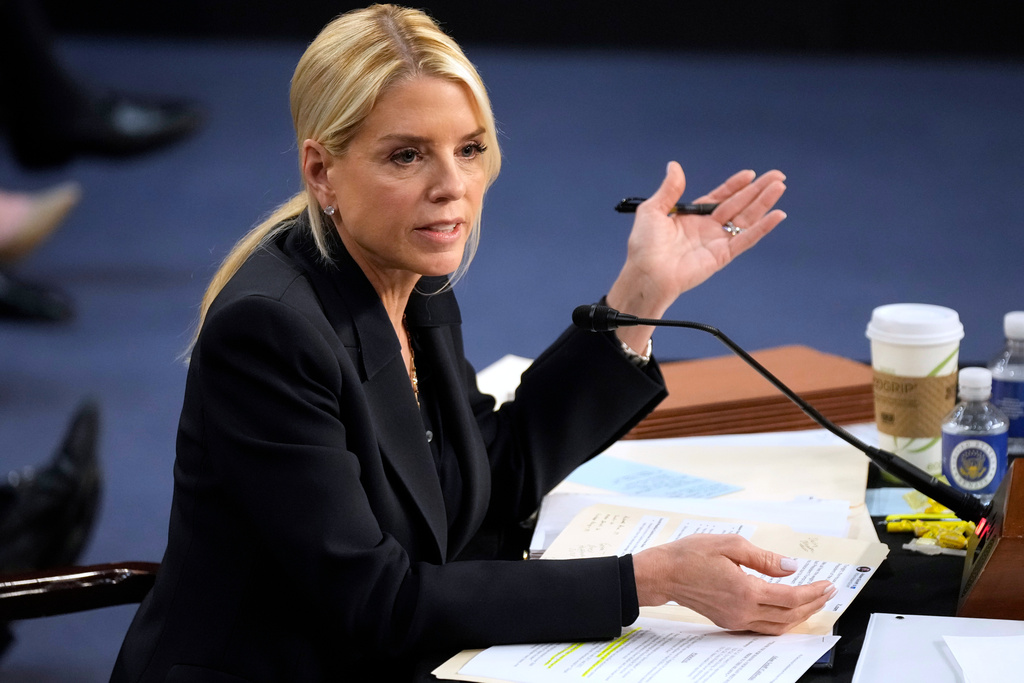
In a heated Senate hearing, Attorney General Pam Bondi came into direct confrontation with the Democrats—Senator Amy Klobuchar being the most prominent among them—making the whole debate about the executive influence and legal accountability even more heated. More than once, Pam Bondi chose not to answer the question of whether Pam Bondi looks at the demands President Trump makes on the public (like when he asked her to prosecute his political opponents) as basically orders she must carry out. She insisted on not treating them as personnel issues, nor did she want to make any comments about her alleged reluctance to his pressure campaign on the part of U.S. Attorney for the District of New Jersey, Erik Siebert. Klobuchar confronted Bondi with the question whether the Trump post on Truth Social that called for prosecutions of people such as James Comey and Letitia James was a “directive.” Bondi avoided answering directly, saying that Trump’s remarks have been coming consistently over time and that she would not dissect them any further. Additionally, she refused to comment on the DOJ investigation regarding Comey, saying that the ground was not suitable. Bondi’s disobedience was not limited just to Klobuchar. In her comments throughout the hearing, she fought fiercely against other Democratic senators who were questioning her regarding Jeffrey Epstein-related revelations and claims of political misuse of the DOJ. Her attitude reveals a more profound schism regarding the limits of executive power and the independence of law enforcement—and demonstrates that she is willing to take a stand against the opposition. or more in-depth stories and industry insights, visit our Magazine Homepage.