
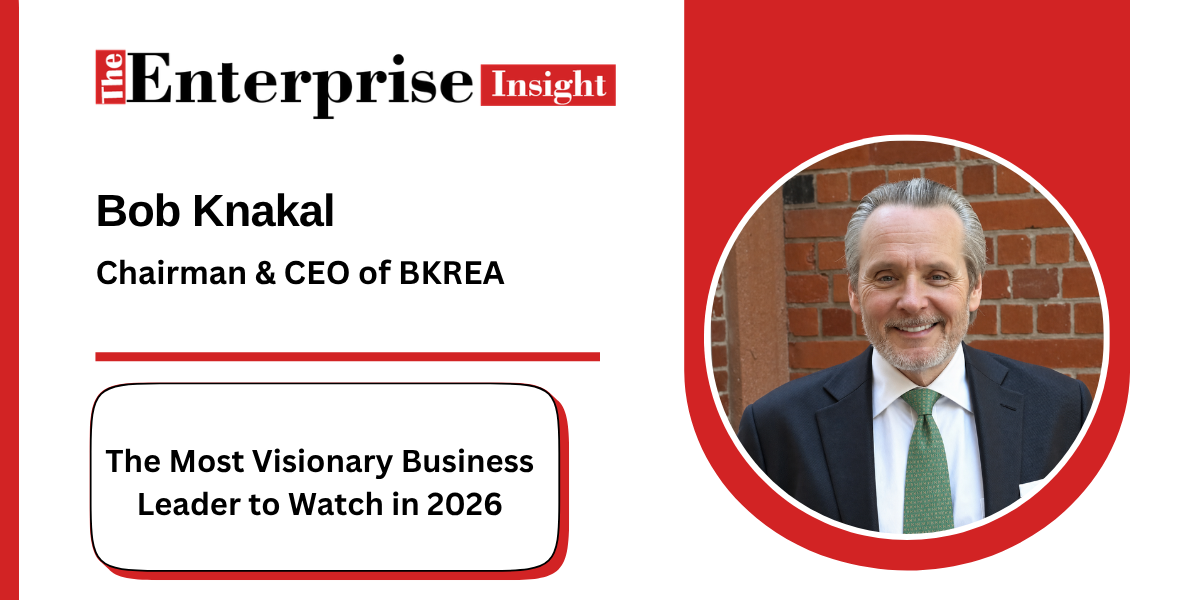
In commercial real estate, numbers tell stories. They reveal patterns, signal turning points, and, when viewed over time, paint a picture of discipline, persistence, and execution. In the case of Bob Knakal, the numbers do more than document a career. They define one of the most prolific brokerage runs in US history.
From 1984 through 2026, Knakal sold 2,398 buildings totaling more than 91.9 million square feet and over $24 billion in aggregate value. But those totals, while impressive, only scratch the surface. The real story lies in how those numbers evolved year by year, cycle by cycle, and decision by decision.
The Early Years: Building the Foundation (1984–1990)
Every career has a starting point, and in 1985, Knakal’s began with just 4 buildings sold. That number jumped quickly to 22 buildings in 1986 and 25 in 1987, signaling early momentum. These were formative years at Coldwell Banker (the predecessor company to CBRE), where the focus was simple: learn the business, make calls, and build relationships.
By 1988, Knakal sold 24 buildings, and in 1989, that number rose to 26 buildings, marking the transition into the Massey Knakal era. The trajectory was clear. This was not a slow, incremental build. It was a disciplined ramp-up driven by activity.
Then came 1990, where production dipped to just 7 buildings sold during the height of the Savings & Loan Crisis. For many, that might have been a setback. For Knakal, it was part of the learning curve. Markets shift. Externalities have an impact. Momentum stalls. The key is what happens next.
Resilience and Rebuild (1991–1995)
From 1991 through 1995, Knakal rebuilt with consistency:
- 1991: 17 buildings sold
- 1992: 23 buildings sold
- 1993: 30 buildings sold
- 1994: 47 buildings sold
- 1995: 32 buildings sold
The standout here is 1994, where 47 buildings sold represented a major step forward. This period reflects something critical in brokerage: once the foundation is in place, production can scale quickly. Selling building for the Resolution Trust Corporation, which was tasked with disposing of assets from failed banks, was a big part of this 1994 surge. Knakal, a life-long, die-hard, New York Rangers fan, jokes that the positive feelings from the Rangers winning the Stanley Cup that year had something to do with the increase in productivity.
As noted in his career reflections, tough markets often separate those who are committed from those who are not. Knakal leaned in, increasing activity while others pulled back.
The Breakout Phase (1996–2000)
If the early 1990s were about rebuilding, the late 1990s were about acceleration.
- 1996: 62 buildings sold
- 1997: 53 buildings sold
- 1998: 66 buildings sold
- 1999: 87 buildings sold
- 2000: 71 buildings sold
The defining year here is 1999, with 87 buildings sold. That level of production is not accidental. It is the result of systems, territory specialization, and relentless prospecting.
During this period, Massey Knakal’s territorial system took hold. Brokers became hyper-focused on specific neighborhoods, allowing for deeper market knowledge and stronger client relationships. The numbers reflect the effectiveness of that strategy. At this point, all Manhattan sales territories at Massey Knakal we filled and, in 1999, the firm decided to open an office in Queens – a move most Manhattan brokers would not even consider. This was followed closely by the opening of an office in Brooklyn in 2000. Both of these pioneering moves proved to be critical to Knakal’s growth in the following cycle.
Scaling Through Cycles (2001–2005)
The early 2000s brought both opportunity and volatility.
- 2001: 79 buildings sold
- 2002: 73 buildings sold
- 2003: 81 buildings sold
- 2004: 52 buildings sold
- 2005: 145 buildings sold
The most remarkable figure here is 2005, where Knakal sold 145 buildings in a single year. That is not just a personal best. It is a statement.
To understand that number, you have to consider the infrastructure behind it. By this point, Massey Knakal had built a machine. Training, data, and market coverage all aligned. When the market provided the opportunity, the platform was ready to capitalize. It also was indicative of a counterintuitive move by Massey Knakal to implement a rapid and robust expansion post-9/11 when most companies were scaling back. This could have compromised the future of the business but actually served as a key ingredient in leading to perhaps the most vivid run of market sector dominance in the history of brokerage in America.
Peak Performance (2006–2007)
The momentum continued:
- 2006: 106 buildings
- 2007: 105 buildings
Two consecutive years above 100 buildings is rare in any brokerage career. It reflects not only market strength but also operational excellence.
These were the “best of times,” as described in his career narrative in Knakal’s best selling book, “Selling Buildings”.. But as history shows, strong markets do not last forever.
Navigating the Downturn (2008–2011)
The Great Financial Crisis tested everyone in the industry. Companies that were rock solid institutions for a century were all of a sudden out of business. Uncertainty was high and market conditions were less than ideal.
- 2008: 66 buildings sold
- 2009: 55 buildings sold
- 2010: 68 buildings sold
- 2011: 62 buildings sold
While volumes declined from peak levels, Knakal maintained a high level of production relative to the market environment. This is where experience matters. When transactions slow, relationships and trust become even more important.
The ability to stay active during downturns is a hallmark of long-term success. As emphasized in his professional philosophy, it is not about chasing quick wins. It is about serving clients through all market conditions.
The Resurgence (2012–2014)
Following the downturn, the market rebounded strongly. Massey Knakal rehired quickly in 2010 when the market began to emerge from the GFC. The investment sales cycle is not immediate but by late 2011, the market was rising like a rocket-ship. Knakal’s next three years took advantage of that momentum.
- 2012: 133 buildings sold
- 2013: 82 buildings sold
- 2014: 150 buildings sold
The year 2014 stands out with 150 buildings sold, the highest annual total in Knakal’s lifetime dataset. That level of activity is extraordinary and reflects both market conditions and peak operational capacity.
This period also coincided with the sale of Massey Knakal to Cushman & Wakefield for $100 million,, marking the end of one chapter and the beginning of another.
Transition and Adaptation (2015–2019)
After joining Cushman & Wakefield and later transitioning to Chairman of Investment Sales at JLL, Knakal’s production remained strong. But by his own admission, working at the big global firms was not a good fit for him. He was used to being in the trenches on the front lines and that’s where he does his best work. Notwithstanding this, the next few year were not bad by industry standards:
- 2015: 74 buildings sold
- 2016: 58 buildings sold
- 2017: 66 buildings sold
- 2018: 46 buildings sold
- 2019: 39 buildings sold
While the numbers are lower than peak Massey Knakal years, they remain highly competitive. Transitions between firms often come with adjustments, yet the consistency in output demonstrates adaptability.
The Pandemic Impact and Recovery (2020–2023)
The global pandemic had a clear impact:
- 2020: 8 buildings sold
- 2021: 63 buildings sold
- 2022: 73 buildings sold
- 2023: 48 buildings sold
The drop to 8 buildings in 2020 reflects the market freeze experienced worldwide. What stands out is the rebound to 63 buildings in 2021 and 73 in 2022.
This reinforces a key principle: markets recover, and those who stay engaged are positioned to benefit.
The BKREA Era (2024–2026)
The most recent chapter shows continued activity:
- 2024: 18 buildings sold
- 2025: 43 buildings sold
- 2026: 9 buildings sold (partial year)
With the launch of BKREA, Knakal continues to evolve, leveraging decades of experience and integrating new tools and strategies. Even after four decades, the commitment to the business remains evident.
The Big Picture
When you step back and look at the full arc, several themes emerge:
- Consistency Over Time
Selling 2,398 buildings is not about one great year. It is about showing up every day, every year, and executing. - Scaling Through Systems
The jump from dozens to over 100 buildings annually was driven by structure, not luck. Specialization and data played a critical role. - Resilience in Down Markets
From the early 1990s to 2008 to 2020, downturns were met with increased focus, not retreat. - Adaptability Across Platforms
Whether at CBRE, Massey Knakal, Cushman & Wakefield, JLL, or BKREA, production remained strong. It was even better when independently competing with larger, more powerful competitors. - Long-Term Perspective
As emphasized in his own lessons, success in brokerage is not about the quick deal. It is about building relationships and creating value over time .
Final Thoughts
Numbers alone do not tell the whole story, but they provide undeniable evidence. In Bob Knakal’s case, the numbers reflect a career defined by discipline, innovation, and persistence.
From 4 buildings in 1985 to nearly 2,400 buildings over four decades, the trajectory is clear. This is what a long-term approach, executed consistently, can produce.
For anyone in commercial real estate, the takeaway is straightforward: focus on the fundamentals, commit to the process, and think long term. The numbers will follow.
In any sales role, the goal is not one good year, not one good deal or one good moment. It is sustained excellence. Bob Knakal has shown that sustained excellence by implementing a very simple formula: Do the right things, the right way… For a very long time!